

Modern Australian
The Times

in The Book of Falling, David McCooey offers a series of psychological snapshots

  • Written by Bonny Cassidy, Senior Lecturer in Creative Writing, RMIT University
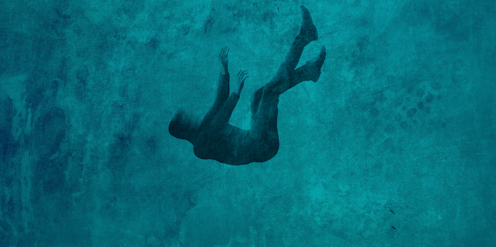
in The Book of Falling, David McCooey offers a series of psychological snapshots

On a recent award-judging panel, I found myself once again in a conversation about what makes a book of poems “cohesive” – that is, what makes it a book-length experience, as distinct from a single-poem dip, a chapbook dive or, indeed, the narrative journey of a novel.

The panel’s consensus was that it is not necessarily theme that holds a collection between two covers. It can be structural features, such as symmetries or contrasts. It can be a dramatic terrain of action and voice. Or it might be an experiment in technique and form that creates a conceptual sandwich.

In David McCooey’s The Book of Falling, much is made of the titular theme as the cohesive element. As well as the title, the book’s blurb, its endorsements and its epigraphs all point to this conceit.

The contents, on the other hand, say something else. In the section and poem titles, and in the poems themselves, we encounter the grand themes of phenomenology and time scales. McCooey circles back repeatedly to “vacant times”: to the separation of humans from other animals, detachments of voice from body, the disintegration of physical matter between past and present.

If I could choose an image to represent this shadow conceit, it would not be falling, but something more horizontal and glitchy.

Review: The Book of Falling – David McCooey (Upswell)

The best poems in The Book of Falling, and its most original and purposeful reason, are the three “photo poems” at its centre. I want to focus on these before considering the less compelling poems that flank the heart of the book.

The formal and conceptual gravitas of the photo-poem sequences lies in their variety of media and style, and the unexpected combinations of signification created by the interfacing photographs and texts. It’s not a radical method, but it carries a surrealist sense of possibility that is quite different to the book’s narrative and imagistic poems. The first series, Posing Cards, features pictures taken by McCooey’s father Wyndham. His archival snaps are themselves poetic in their absurd, Forbesian contradictions: a jocular group, including a fellow wielding a rifle; a man-cave plastered with a sign that says “The Arse End” and a finger pointing to a memento mori. Accompanying these fun compositions is a sober series of instructions for blocking a family portrait: Place Mom and Dadin the standard Mom and Dad sitting pose. Then bring in the children. The poet lets us do the work of inventing connections between these imperatives and the resistant images, between the tension of son and father, bringing into play McCooey’s established affinity for cinema, and particularly horror. Redundancies and Bathroom Abstraction use McCooey’s own photographs, which stand in high tonal and stylistic contrast to his father’s raucous eye. The photos are highly mannered images of geometrically framed bathrooms and brutalist architecture, cool and controlled. In Redundancies, the unpeopled surfaces of reinforced concrete match the robotic language of found poems drawn from corporate mass communiques to employees during the pandemic. You know the sort of thing: I want to assure you that weare working hardto provide as much certaintyto you as possible. Although McCooey makes no source attribution for these, as a fellow academic I feel confident they are from university communications. The images and text build a story about a withdrawal of genuine social personality, but to me it seems too easy to satirise these Orwellian placations without having something more to say about them. Domestic spaces The series Bathroom Abstraction, on the other hand, is haunted – the poet addresses the subject of the poems in the second person, summoning his alienating experiences of bathrooms like psychological snapshots: You think about the bathroom you made your way to after your bypass operation. Crossing your hands over your chest and applying pressure, like the nursing staff told you. These prose poems are more felt, more earnest than those in Redundancies. McCooey is laying more on the line here, referring to the vulnerability of bodies that are naked, ill or attending to their basic needs. The Book of Falling dwells in the domestic spaces where these sorts of vulnerabilities tend to occur (and to be hidden). Even when not writing about bathrooms, the regular scenes of looking out the windows of home, of bedrooms, of watching television or weather, have a similar quality of privacy and enclosure: “The night-time wind sweeps its baton among the rubbish behind some anonymous buildings.” This theme is established in Lives I, the opening trio of poems. These dramatise the voices of three famous dead women as they move through imaginary space and time. They round out the palette of The Book of Falling, but they seem an odd choice as an opening sequence. They are much more fully resolved and intricately composed than other poems in the book, which look slight by comparison. The concept is perhaps a touch gimmicky; I wondered whether Marilyn Monroe, if she were alive in this century as McCooey fantasises, would really only respond to the public reporting of sexual assault by saying: “yes: me too, me too”. But that is the poet’s prerogative. Read more: Adam Aitken: a forensic poet with obsessive resolve Resonant phrases McCooey is capable of resonant phrases. He has a penchant for oxymoronic images like “Honey and maggots” or “the brief duration of abysmal sleep”. He is also capable of some clangers: Meanwhile the bats in the ironbark tree are taking to the sky. Their breathtaking wingshave an extensive repertoire of sounds. Why not simply “ironbark” without “tree”? Are the wings themselves “breathtaking” or would that adjective more aptly describe the sound they make? Surely it is the poet’s job to describe the repertoire, not tell us about it (nor describe the sound of actual bats as “bats in a horror movie”). My taste is for McCooey’s lighter tankas and fragments. I enjoyed their freeness, the sense of the poet simply enjoying himself with a bit of objectivist simplicity and not being too careful about well-wrought anything: And as if someone uttered the trigger word,rain begins without ceremony. But it’s not “driving rain”;it’s just sitting outside, engine idling over the neighbourhood.It’s neither coming nor going. It doesn’t give a damn.And then, like a poem ending, you look out the window,and the rain has stopped, the birds have returned, and the windhas begun its invisible cover-up job. Other poems in this mode are lean, rather than being either pregnant with ambiguity or densely glittering. In a full-length collection they run the risk of becoming stocking fillers. A similar hollowness or scrappiness is found in the satires and elegies that comprise a later section of the book; they are neither witty nor dark enough to justify their inclusion. Maybe they just needed to be pushed harder, across the threshold from sweet into the strange places that McCooey reaches in the photo poems. The final sequence, Lives II, takes an autofictional turn and might have been better as the opening set. As with Bathroom Abstractions, McCooey here drops the performative tone of the satires and the vacant voices of the dramatic characters, and inhabits his own memory more deeply through third-person narration: The film is finished; the day is over. While his son talks himself to sleep, M sits by a window looking onto the street, the whole world caught in the giant belly of the night. Reading The Book of Falling, I constantly wanted to go at the poems with a pen to remove final lines and unnecessary punctuation at line ends, smarten up those bats, cut the thin poems. I wanted to restructure the plodding sections in a way that would properly frame the photo poems, intersperse them perhaps, or add more of them, really claim their form as the statement of this book. As a reader and critic, I school myself to accept a work on its own merits; you can’t fail a book because it doesn’t deliver on your own idea of it. But McCooey is a mature poet and Upswell is a vital publisher; together they could have punched this up into something more robust. Authors: Bonny Cassidy, Senior Lecturer in Creative Writing, RMIT University

Read more https://theconversation.com/photo-poems-and-bathroom-abstractions-in-the-book-of-falling-david-mccooey-offers-a-series-of-psychological-snapshots-200539

The Connection Between Visibility and Driver Confidence

Operating a vehicle safely requires an immediate, uncompromised stream of visual information from the surrounding road environment. A driver's decis...

Important Things To Know Before Starting An SMSF Setup

Planning for retirement requires careful financial decisions, and many Australians are now looking for more direct control over how their superannua...

Why Retail Cleaning Plays a Key Role in Customer Experience and Business Success

Professional retail cleaning services are an essential part of maintaining a welcoming, safe, and professional environment for customers and staff...

Simple Ways to Make a Commercial Property More Appealing to Buyers

Selling or leasing a commercial property isn’t just about listing the square metres, taking a few photos and waiting for the right person to appea...

What Café Owners Should Know Before Upgrading Their Display Setup

A café display fridge does a lot more than keep cakes cold and sandwiches fresh. It quietly shapes the way customers browse, the way staff move beh...

Creating a Backyard That Feels Comfortable All Year Round

A great backyard doesn’t need to be huge, expensive or perfectly styled. Most of the time, the spaces people actually use are the ones that feel e...

How Homeowners Can Make Smarter Energy Decisions Before Upgrading

Energy upgrades used to feel like something you only looked into after a power bill gave you a nasty surprise. These days, though, more homeowners a...

Why Retail CX Breaks During Peak Sales Events and How to Prevent It

Retail customer experience has become one of the most important drivers of revenue growth, especially during high-intensity sales periods. However, ev...

15 South Indian Dishes Everyone Should Try

If your only experience of "Indian food" is butter chicken and garlic naan, South Indian cuisine is going to feel like discovering an entirely new c...

What Every Homeowner Should Know About Roof and Drainage Maintenance

A home's roof and drainage system work together every day to protect the property from water damage. While many homeowners focus on visible areas such...

From Plans to Priced Quote: The Estimating Workflow Most Builders Skip

For a small one-off job, an experienced builder can size up the materials in their head. The problem is that most jobs are not small one-off jobs, and...

Organisational Experts Share Their Tips for Achieving a Clutter-Free Kitchen

They say the kitchen is the heart of a house which means a clutter-free kitchen not only makes your home in general look nicer, it also makes cookin...

10 Creative Ways AI Image Extenders Are Transforming Digital Content Creation in 2026

Introduction Artificial intelligence continues to reshape the digital landscape, and one of the most exciting innovations in 2026 is the rise of AI i...

What to Do When You're Arrested in Victoria

Most people have thought about this in the abstract. A knock at the door, a hand on the shoulder, a car pulled over on the Hume. In the abstract, th...

Common Financial Disputes During Separation

Separation hits on many levels, not just emotionally. When a partnership ends, untangling the financial side — assets, debts, and everything built t...

Why Posting More Content is Killing Your Brand

More content. More often. More platforms.Most brands have been running this playbook for three years. Most brands have nothing to show for it.Not be...

Garden Clean-Up vs. Regular Maintenance: Which Do You Really Need?

Most people ring a gardener and ask for a "tidy up." What they mean by that, and what the garden actually needs, are often two completely different ...

Solar Panel Maintenance Tips for Melbourne Homes

Three years in and the panels are still on the roof. The inverter is still blinking. The electricity bills are still lower than they used to be, rou...

















