

Can self-help books help with depression? I spoke to readers to find out
- Written by Amber Gwynne, Sessional Lecturer in Writing, The University of Queensland

For millions of readers around the world, self-help books offer a discreet, affordable way to access an array of psychological insights and therapeutic techniques.
Take a moment to browse your local bookshop or department store, and you’ll find books addressing everything from shyness and burnout to worry, weight loss and “the common cold of psychiatric ailments” – depression.
But do they actually help? And what’s the best way to find out?
As part of a larger study, I interviewed 13 readers with a diagnosis of depression about their experiences with reading self-help books. They filled out a survey and then participated in extended one-on-one interviews.
With few exceptions, they recalled an initial phase of wanting “the instant gratification of being fixed”. But they persevered when reading didn’t provide immediate relief, finding that “realistic” expectations eventually yielded more positive and useful negotiations with self-help books over time.
Read more: Explainer: what is depression?
Silver bullet or snake oil?
Numerous studies have considered whether self-help books produce results.
In some studies, clinical researchers have acknowledged the potential of self-help books as a viable treatment for depression. People may feel better after reading them.
In other studies, media researchers have described them as problematic – or even dangerous. People may feel worse after reading them.
Neither approach considers what happens when everyday readers choose self-help books for themselves – and read them whatever way they like.
Read more: The rise of pop-psychology: can it make your life better, or is it all snake-oil?
Self-help means ‘help yourself’
What did my work with real-word readers reveal?
First, they’d learned to read selectively and strategically. They recognised that useful perspectives and advice might be embedded in larger narratives that are irrelevant, unhelpful or even harmful.
 Even a “woo woo” book like The Secret could offer something of value, readers suggested, “because it’s a whole book”. One reader called their approach searching for a “golden thread”. Another insisted some books “are packaged in a lot of junk, but they do have valid, valuable information in them”.
Readers also read widely, picking and choosing from books about other topics to better understand how depression can develop and manifest. “I’m plugging together the gaps between those life experiences and depression,” one reader explained, “because everyone’s experience of depression, the source of it, is different”.
The Happiness Trap by Russ Harris topped the list when I asked readers to name a book they’d found helpful. The rest of the results were surprisingly broad, encompassing more than 200 titles with little overlap. They included everything from The Bhagavad Gita by Eknath Easwaran to Rising Strong by Brené Brown and Sandra Cabot’s The Liver Cleansing Diet.
Interestingly, most readers thought it was “only natural” there are so many self-help books on offer these days. You have to be discerning, they said, yet open to a book’s message – and willing to put in some work. “That’s what self-help means,” a reader pointed out. “It means help yourself: the book’s helping you, but you’re still doing the lifting.”
Even a “woo woo” book like The Secret could offer something of value, readers suggested, “because it’s a whole book”. One reader called their approach searching for a “golden thread”. Another insisted some books “are packaged in a lot of junk, but they do have valid, valuable information in them”.
Readers also read widely, picking and choosing from books about other topics to better understand how depression can develop and manifest. “I’m plugging together the gaps between those life experiences and depression,” one reader explained, “because everyone’s experience of depression, the source of it, is different”.
The Happiness Trap by Russ Harris topped the list when I asked readers to name a book they’d found helpful. The rest of the results were surprisingly broad, encompassing more than 200 titles with little overlap. They included everything from The Bhagavad Gita by Eknath Easwaran to Rising Strong by Brené Brown and Sandra Cabot’s The Liver Cleansing Diet.
Interestingly, most readers thought it was “only natural” there are so many self-help books on offer these days. You have to be discerning, they said, yet open to a book’s message – and willing to put in some work. “That’s what self-help means,” a reader pointed out. “It means help yourself: the book’s helping you, but you’re still doing the lifting.”
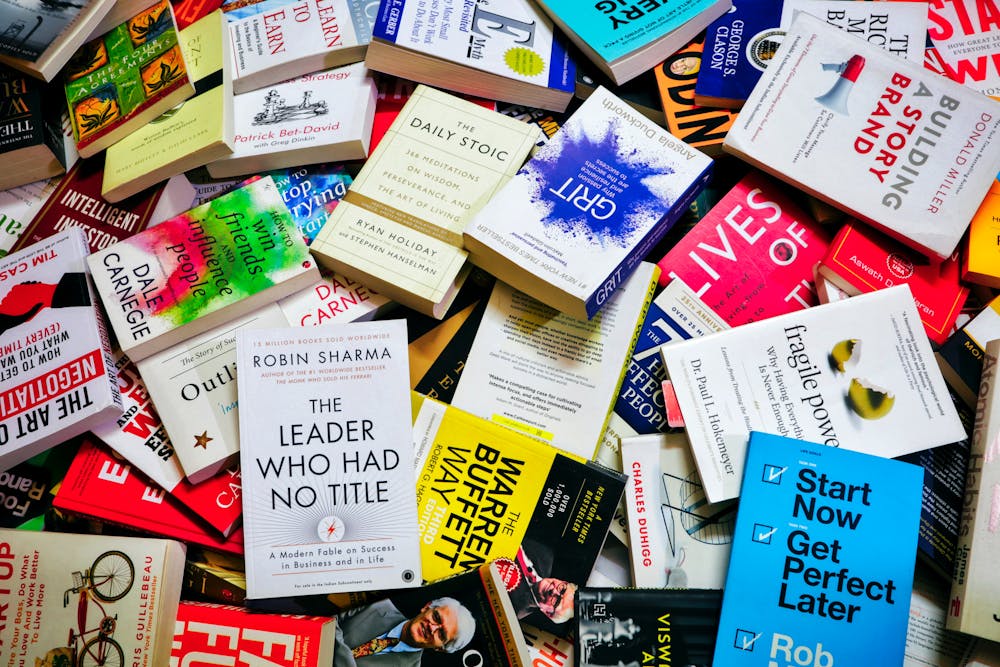
 One reader observed, ‘the book’s helping you, but you’re doing the lifting’.
Thought Catalog/Pexels
Rather than accepting or dismissing individual titles outright, readers stressed “no one book is going to be right for anyone”.
Overall, they steered clear of “exploitative charlatans” peddling “wishy-washy” titles that “spouted gobbledygook” or cobbled together faddish terms and concepts. One reader described them as “books that take you everywhere but take you nowhere”.
Even when they sought out books with some kind of scientific or clinical basis, they avoided “purely scientific” discourse. And they criticised authors who alienated the reader with an impersonal tone, or bamboozled them with dense, esoteric or technical language.
A “good” self-help book, our conversations revealed, “took readers seriously” and allowed them to “connect the dots” for themselves. Self-help books were not a silver bullet. But they could help with depression if you knew what to expect of them – and when the worst symptoms had already passed.
Read more:
Can reading help heal us and process our emotions – or is that just a story we tell ourselves?
Reading between the lines
While typical research approaches often locate the helping power of self-help books between the covers themselves, a readerly approach suggests otherwise: self-help books can help when readers know how to get something out of them.
As my interviewees pointed out, however, a “healthy” or useful approach to reading develops over time. It also depends heavily on circumstance.
Readers are not always or already an “expert audience”, especially if someone is struggling with difficult symptoms. Self-help reading requires practice, perseverance and perspective. Sometimes, readers might simply come across the wrong book at the wrong time – or, happily, the opposite.
There is more to be written about the way people with a specific diagnosis choose and use self-help books.
But it’s too simplistic to think of self-help books as either good or bad. Different readers – at different stages – make use of them in different ways.
Authors: Amber Gwynne, Sessional Lecturer in Writing, The University of Queensland
One reader observed, ‘the book’s helping you, but you’re doing the lifting’.
Thought Catalog/Pexels
Rather than accepting or dismissing individual titles outright, readers stressed “no one book is going to be right for anyone”.
Overall, they steered clear of “exploitative charlatans” peddling “wishy-washy” titles that “spouted gobbledygook” or cobbled together faddish terms and concepts. One reader described them as “books that take you everywhere but take you nowhere”.
Even when they sought out books with some kind of scientific or clinical basis, they avoided “purely scientific” discourse. And they criticised authors who alienated the reader with an impersonal tone, or bamboozled them with dense, esoteric or technical language.
A “good” self-help book, our conversations revealed, “took readers seriously” and allowed them to “connect the dots” for themselves. Self-help books were not a silver bullet. But they could help with depression if you knew what to expect of them – and when the worst symptoms had already passed.
Read more:
Can reading help heal us and process our emotions – or is that just a story we tell ourselves?
Reading between the lines
While typical research approaches often locate the helping power of self-help books between the covers themselves, a readerly approach suggests otherwise: self-help books can help when readers know how to get something out of them.
As my interviewees pointed out, however, a “healthy” or useful approach to reading develops over time. It also depends heavily on circumstance.
Readers are not always or already an “expert audience”, especially if someone is struggling with difficult symptoms. Self-help reading requires practice, perseverance and perspective. Sometimes, readers might simply come across the wrong book at the wrong time – or, happily, the opposite.
There is more to be written about the way people with a specific diagnosis choose and use self-help books.
But it’s too simplistic to think of self-help books as either good or bad. Different readers – at different stages – make use of them in different ways.
Authors: Amber Gwynne, Sessional Lecturer in Writing, The University of Queensland 
















